


2026
What Causes Furnace Short Cycling During a Kamloops Winter
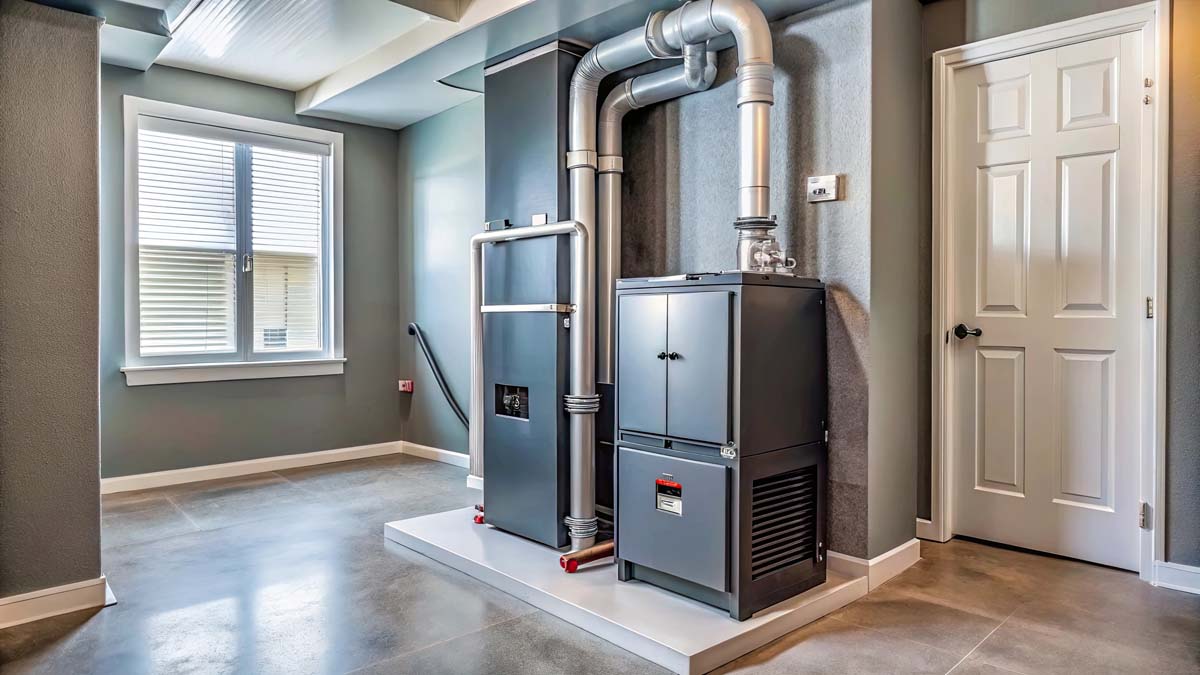
A furnace that short cycles is easy to recognise once you know what you are listening for. The burner lights, the blower comes on, the house starts to warm, and then a few minutes later everything shuts down. A short while later it all starts again. Repeat for the rest of the evening.
It is not just irritating. Each start is the hardest moment in a furnace's working life, and a unit that is starting four times as often as it should is wearing out four times as fast. It also heats the house unevenly, because the blower never runs long enough to move warm air to the far rooms, and it costs more than running longer and less often.
Most of the causes are identifiable from the pattern, and several of them you can check yourself.
How Often Is Normal
Worth settling first, because not every cycle is a short cycle.
A correctly sized furnace in moderate weather typically runs a few cycles an hour, with each burn lasting ten minutes or more. On the coldest nights of a Kamloops winter it should run for long stretches or close to continuously, because that is the condition it was sized for. The pattern that signals a problem is a burn of two to five minutes, repeated six or more times an hour, especially when it happens in cold weather rather than in mild shoulder season.
Note the timing as well as the frequency. A furnace that runs for a couple of minutes and shuts down behaves differently from one that lights, runs for a few seconds and then drops out, and the difference points at different faults.
Restricted Airflow Is the Most Likely Cause
If a furnace heats up and then shuts off after a few minutes, the usual explanation is that it is overheating and protecting itself.
A furnace is designed to have a specific volume of air moving across the heat exchanger, carrying heat away as fast as the burner produces it. Reduce that airflow and the heat exchanger gets hotter than it should, the high limit switch opens, and the burner shuts down. The blower keeps running to clear the heat, the switch cools and resets, the burner relights, and the whole thing repeats. That cycle is exactly what short cycling looks like from the hallway.
The filter is the first thing to check and the cause in a large share of cases. Kamloops summers are dry and dusty, and a filter that was fine in September can be loaded by midwinter, particularly in homes near open ground or construction. After that, look at whether supply registers have been closed or blocked by furniture, and whether return air grilles are clear. Closing vents in unused rooms is a popular economy measure and a reliable way to cause this problem.
Beyond that, the causes are internal: a blower wheel coated in dust and no longer moving its rated volume, a blower motor or run capacitor starting to fail, or ductwork that was undersized to begin with. Those are service items rather than homeowner checks.
When It Lights and Drops Out Almost Immediately
A different pattern with a different cause. The burner ignites, runs for five to ten seconds, shuts off, tries again, and after a few attempts the furnace locks out entirely and may need a power cycle to reset.
That sequence usually means the furnace cannot confirm that the flame is lit. A flame sensor sits in the burner flame and generates a small current that tells the control board the burn is real. As the sensor accumulates a coating over a season or two, that signal weakens, and once it drops below the threshold the board assumes there is no flame and closes the gas valve as a safety measure. Cleaning or replacing the sensor is a routine, inexpensive job and resolves it completely.
A similar pattern can come from a pressure switch that is not staying closed, which brings us to the venting.
Venting and Condensate Problems in Cold Weather
This is the group of causes that is specific to winter, and Kamloops produces all of them.
High-efficiency furnaces vent through plastic pipe out a sidewall rather than up a chimney, and they draw combustion air the same way. Those terminations sit low enough to be blocked by drifted snow, by snow thrown from a driveway, or by frost and ice building up around the outlet in a cold snap. A furnace that cannot establish proper draft will trip its pressure switch and shut down, often repeatedly as conditions change through the day. Walking outside to check that both pipes are clear is one of the most useful things a homeowner can do in winter, and it is worth doing after every significant snowfall.
The condensate drain is the other winter item. A high-efficiency furnace produces water as it runs, and that water has to drain away. If the line is partly blocked, or if it runs through an unheated space or along an exterior wall where it can freeze, water backs up and trips a safety switch. The furnace shuts down, the water eventually drains or thaws, and it starts again. On an older chimney-vented furnace, a blocked or deteriorating flue causes related problems and needs attention promptly for safety reasons rather than comfort ones.
Oversizing, and Why Older Homes Are Prone to It
Sometimes nothing is broken and the furnace is simply too big for the house.
An oversized furnace produces heat faster than the house loses it, so it satisfies the thermostat in a few minutes and shuts off, then does it again when the temperature drifts down. The symptom is identical to an airflow fault, but it happens in mild weather and disappears in a deep cold snap, because that is the only condition where the output is appropriate.
It is common in older Kamloops homes for a predictable reason. A furnace gets replaced like for like, matching the output of the unit coming out rather than calculating what the house now needs, and in the meantime the house has had attic insulation added, windows replaced, or air sealing done. The heating load has fallen substantially and the equipment has not. Houses that were renovated between furnace replacements are the most likely candidates.
There is no adjustment that fixes genuine oversizing. A two-stage or modulating furnace sized from a proper heat loss calculation is the real answer, and it is worth getting the calculation done before the next furnace replacement rather than inheriting the problem again.
Thermostat and Location Issues
A smaller category, and worth ruling out because the fix is cheap.
A thermostat in the wrong place will cycle the furnace badly no matter how healthy the equipment is. Mounted where afternoon sun falls on it, it reads warmer than the house and cuts the furnace short, which is a real issue in Kamloops where winter sun through a south-facing window is strong. Mounted in a draught from a door or on an exterior wall, it reads colder. Placed near a fireplace, a wood stove, a lamp or a kitchen, it reads whatever is happening locally rather than in the house.
Beyond location, dying batteries, loose or corroded wiring and an incorrectly configured cycle rate all produce erratic cycling. Smart and programmable thermostats have settings that control minimum run time and cycles per hour, and these are frequently left at a default that does not match the equipment.
If the furnace itself checks out, the thermostat and its position are the next place to look.
What You Can Check and What You Should Not
Before calling anyone, it is reasonable to work through the following:
- Replace the air filter, even if it does not look especially dirty, and note the date
- Open every supply register and clear anything blocking return air grilles
- Check outside that the vent and intake pipes are clear of snow, ice and debris
- Look for water around the base of the furnace, which points at a condensate problem
- Confirm the thermostat is not in sun, draught or near a heat source, and replace its batteries
- Note the pattern: how long each burn lasts, how many times an hour, and whether it differs in mild and cold weather
That last point is genuinely useful to a technician and takes five minutes to record.
Two things are not homeowner territory. One is anything involving the gas train, the burners or the heat exchanger. The other is a furnace that smells of gas or that you suspect has a cracked heat exchanger, which can allow combustion products into the air you breathe. If you smell gas, leave and call the emergency line. If you have any suspicion about the heat exchanger, shut the furnace off and have it inspected, and make sure the house has working carbon monoxide alarms regardless.
Most of This Is Preventable
Short cycling is overwhelmingly a maintenance problem. The flame sensor, the filter, the blower wheel, the condensate line and the airflow are all things a heating maintenance visit addresses before they shut the furnace down in January. An annual service in early autumn costs a fraction of an emergency call on the coldest night of the year, and most manufacturers expect documented maintenance for warranty purposes anyway.
Book a Service Call
Hilltop Plumbing and Heating serves Kamloops and the Thompson Okanagan with furnace, boiler and heating installation and repairs, including diagnosis of cycling problems.
If your furnace is cycling and the basics have not sorted it, tell us the pattern you are seeing and we will take it from there. Call (236) 499-2201 or get in touch.