


2026
How Smart Thermostats Work With Furnaces, Boilers and Heat Pumps
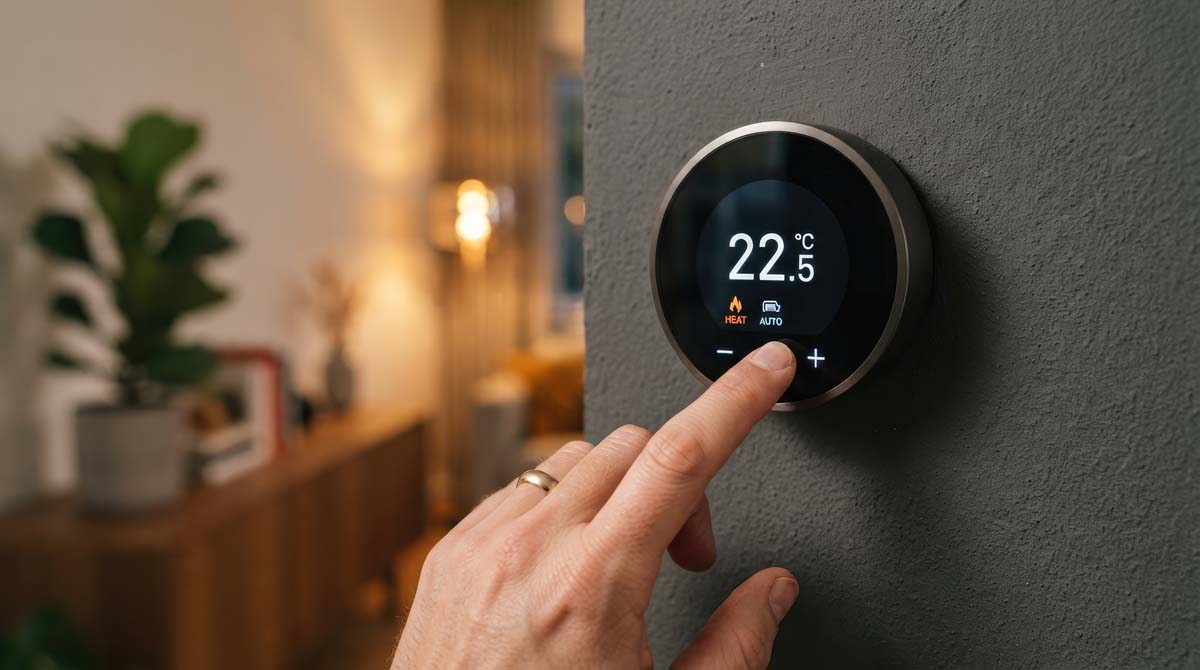
Smart thermostats are sold as though every heating system were the same thing with a different badge. Buy the thermostat, mount it on the wall, connect it to the house wifi, and start saving money.
For a single-stage gas furnace that is roughly true. For a boiler, a heat pump, or electric baseboard heating, it ranges from more complicated to genuinely not possible with the wrong unit. Most of the disappointing installations we see are not faulty thermostats. They are the right thermostat on the wrong system, or the right thermostat configured as though it were controlling something else.
What a Smart Thermostat Actually Does
Stripped of marketing, the useful functions are a short list.
It holds a schedule, so the house is not heated to full temperature when nobody is home or awake. It can be changed from a phone, which matters if your routine is irregular. It reports on how long the system ran, which is the only easy way most homeowners ever see what their heating is doing. Some models adjust the schedule based on occupancy patterns or location, and some can stage equipment more intelligently than a basic thermostat.
Essentially all of the savings come from the first item. Not heating an empty house is what reduces the bill. The learning and remote features are convenience, and they are worth having, but a well-configured basic programmable thermostat captures most of the financial benefit.
The Wiring Question That Stops Half of Installations
A smart thermostat has a screen, a radio and a processor, so it needs continuous power. Traditional thermostats did not.
That power normally comes from a common wire, usually labelled C, running back to the furnace or air handler. In houses wired within the last couple of decades it is generally present. In older Kamloops homes it very often is not, and this is the single most common obstacle to a smart thermostat going in cleanly.
There are three ways around it. A new cable can be pulled from the thermostat location to the equipment, which is the best answer and sometimes easy and sometimes not depending on wall access. An adapter at the furnace end can create a common from the existing wires, which works well on most forced-air systems. Or the thermostat can draw power from the heating circuit without a common, which some models support and which can cause intermittent faults, particularly on systems the technique was not designed for.
Checking what is behind the existing thermostat before buying anything saves a lot of trouble. Counting the wires and noting their colours and the terminals they land on is enough to tell whether this will be straightforward.
Forced Air Furnaces
This is the easy case, with one caveat worth knowing.
A single-stage furnace has one output: on or off. Nearly every smart thermostat handles it, and the installation is normally a matter of the common wire and correct wire mapping.
Two-stage and modulating furnaces are different. These run at reduced output most of the time, which is quieter, more even and more efficient, and they step up only when the house needs it. To use that, the thermostat has to support staging and be configured for it. A thermostat wired to a two-stage furnace as though it were single stage will simply run the furnace on high every time, which throws away the reason the furnace cost more. We see this often enough that it is worth checking on any existing installation.
If you are replacing a furnace and a thermostat at the same time, matching them deliberately is the moment to get this right.
Boilers and Hydronic Heating
Boilers are where the assumptions behind smart thermostats break down most.
A hydronic system often has only two wires at the thermostat, calling a zone valve or a circulator, with no common available and sometimes no easy route to add one. Multiple zones mean multiple thermostats, each needing its own power arrangement. Some installations need a relay or an isolation device between a smart thermostat and the boiler control, and older millivolt-controlled equipment will not work with a powered thermostat at all.
There is a more fundamental point as well. On a modern condensing boiler, the efficiency work is done by the boiler's own control using outdoor reset, which adjusts water temperature according to the weather. That logic sits in the boiler, not in the thermostat, and a smart thermostat does not improve on it. Where the boiler is set up properly, the thermostat is doing comparatively little.
Radiant floor heating adds a timing problem. A concrete slab takes hours to respond, so deep setbacks and quick recoveries do not work. A schedule designed for forced air, applied to a slab, produces a house that is cold in the morning and warm at bedtime. Radiant systems generally do best held at a steady temperature with only gentle adjustments, which means the features people buy a smart thermostat for are the ones they should mostly leave off.
None of this means a smart thermostat is wrong on a boiler. It means the model and the settings need to suit the system, and the savings expectation should be realistic.
Heat Pumps Need a Heat Pump Thermostat
This is the configuration where the wrong choice costs real money, and it is becoming more common as heat pumps spread through the Interior.
A heat pump needs a thermostat that can control the reversing valve, which switches the system between heating and cooling, and that can manage backup heat separately. On most installations that backup is electric resistance heat, which is several times more expensive to run than the heat pump itself. The thermostat decides when it is allowed to engage.
Get that wrong and the system leans on the expensive heat far more than it should. The classic version is a deep overnight setback: the thermostat sees a large gap in the morning, decides the heat pump will not close it fast enough, and brings on the strip heat to catch up. The homeowner concludes their heat pump is expensive to run when the real problem is a setting.
Dual fuel systems, pairing a heat pump with a gas furnace, need a thermostat that can handle the changeover between them and a sensible changeover temperature. Below that point the furnace runs, above it the heat pump does. Set badly, the system runs the wrong appliance for much of the season.
A heat pump also benefits from being left alone. Modest setbacks of a couple of degrees are fine. Large ones usually cost more than they save.
If you are putting a smart thermostat on a heat pump or a cooling and heat pump system, the configuration matters more than the brand.
Systems Where Standard Smart Thermostats Do Not Work
Two cases catch people out, and both are common in older Interior housing stock:
- Electric baseboard and in-wall electric heaters, which switch line voltage at 120 or 240 volts rather than a 24 volt control circuit, so a standard smart thermostat cannot be used and a purpose-built line voltage smart thermostat is required, usually one per heater or zone
- Millivolt systems, found on some older furnaces, wall heaters and gas fireplaces, which generate their own tiny control voltage and are not compatible with powered thermostats without additional equipment
In both cases there are workable products available. They are simply not the ones on the shelf beside the mainstream models, and buying the wrong one is an afternoon wasted.
Getting the Most Out of One
Once it is in and correctly configured, a few habits determine whether it earns its keep.
Build a schedule that reflects when the house is genuinely occupied, and resist the urge to override it constantly, since a thermostat that is manually adjusted several times a day is just a thermostat. Keep setbacks modest on heat pumps and radiant systems and more generous on gas forced air. Make sure it is mounted somewhere that reads the house rather than the sun, a draught or a wood stove, because no amount of software compensates for a bad location. Look at the runtime reports occasionally, since a steady increase in daily runtime at similar outdoor temperatures is an early sign that something needs service. And check what happens if the wifi drops, because a thermostat that loses its schedule and holds a low temperature during a cold snap is a frozen pipe risk.
If you are not sure whether your existing system will work with the thermostat you have in mind, that is a short conversation rather than a service call. We work on forced air, hydronic and heat pump systems across Kamloops and can tell you what will work with what you have, and we handle thermostat supply and installation as part of our heating work.
Ask Before You Buy
Hilltop Plumbing and Heating serves Kamloops and the Thompson Okanagan with plumbing, heating, cooling and gas fitting, including furnaces, boilers, heat pumps and controls.
Send us a photo of the wires behind your current thermostat and tell us what kind of heating you have, and we will tell you what fits. Call (236) 499-2201 or contact us.